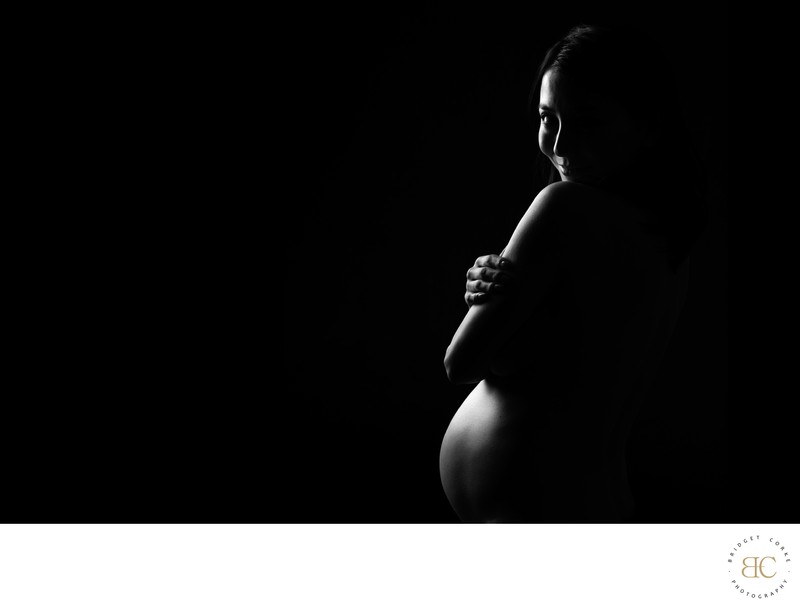
In studio maternity portraiture, light and pose do far more than flatter. They shape mood, define form, and help turn a fleeting season into something timeless.
A small change in posture, the turn of a chin, the position of a hand, or the direction of light can completely alter the feeling of an image. These choices are never random. They are part of how a portrait becomes more than a record of pregnancy and begins to carry emotion, presence, and meaning.
Below are some of the ways light and pose work together in my maternity portraits.
Classic cradle
The cradle pose remains one of the most enduring approaches in maternity portraiture. Hands resting gently on the bump create an immediate sense of connection, while soft light helps shape the body in a calm and flattering way.
This combination often feels simple, elegant, and emotionally direct.
Silhouette and sculptural light
Backlighting can reduce the portrait to its most essential shape: the outline of the mother and the curve of the bump.
A silhouette is powerful because it is both minimal and unmistakable. It removes distraction and turns the body into form, making the portrait feel sculptural, timeless, and quietly dramatic.
Overhead compositions
When a portrait is photographed from above, the feeling changes. The image becomes more reflective, more contained, and often more intimate.
Overhead light and a lying-down pose can create softness while still defining contour, making this approach especially suited to quieter, more emotive portraits.
Couple connection
When a partner is included, light and pose begin to describe a relationship as well as a pregnancy. A small gesture, a shared stillness, or the way two bodies are positioned together can bring warmth and anticipation into the frame.
The goal is not performance, but connection.
Fabric and movement
Draped fabric introduces another layer to maternity portraiture. It can soften the body, create movement, and interact beautifully with directional light.
When used with restraint, fabric helps shape the portrait without taking attention away from the person at the centre.
Grounded seated poses
Seated or floor-based poses often bring a sense of stability and strength to the portrait. They can feel grounded, calm, and self-possessed, especially when combined with more focused lighting.
This approach often works beautifully for maternity portraits, creating a sculptural, composed feel.
High-key simplicity
Bright, even light against a pale background creates a very different mood from darker, more shadowed portraits. The result can feel airy, pared back, and serene.
In these portraits, the absence of visual heaviness allows form and expression to carry the image.
Dramatic shadows
A single harder light creates stronger contrast and a more graphic result. Shadow becomes part of the portrait language, revealing only what matters and allowing the rest to fall away.
This can produce maternity portraits that feel bold, minimal, and strikingly timeless.
Why this matters
Good posing is not about making someone perform for the camera. Good lighting is not about effect for its own sake.
Both exist to support the portrait — to help it feel natural, shaped, and emotionally true.
My role is to guide you through those choices so that the final image does not feel forced or overworked, but quietly powerful.
If you would like a broader overview of how a session is prepared and guided, you can read my maternity photoshoot guide. You can also see these ideas in practice in my maternity portfolio.